Before I knew it, the weekend was over. My birthday, celebrated in the evening with a party that I had secretly hoped my wife wouldn't throw, was on Friday. I didn't tell her that I wished not to celebrate it, partially because when I say things like that she begins to look at me with some sort of vague, grave concern, as if not wishing to celebrate one's birthday is a clear sign that one is anything but alright, but mostly because she seemed too eager to do something for me, to show me some high degree of consideration and affection, for me to tell her that she had better not. What I told myself, at least, was that I had too much deference to her desire to be a good wife to tell her that I would rather be left alone. I had a bathroom to repair, after all, and there wasn't much hope of getting that done with a party happening on Friday, since we were already engaged for another on Saturday, and then the softball tournament on Sunday. No, I would never finish the bathroom with a party. Besides, it's only my birthday. There's nothing terribly special about birthdays, least of all my own. Birthdays can easily be forgotten, and in my family, they often are. I have no problem with this, nor have I since I turned twelve, which was, for the record, thirteen years ago. If I received no phone calls, no emails, no visits, and no cards, and if the day began, proceeded, and ended with the same utter lack of ceremony as every other day, I should have had no cause for complaint. But then my mother called, and said that my brother was going to be in town from New Orleans, and wouldn't it be nice to have a brunch on Sunday for my birthday to get the whole family together, et cetera, et cetera, and in spite of myself I assented. As soon as I hung up the phone, I thought of calling her back and asking that it not be a birthday party per se, with cake and hand-made cards from all of my nieces and nephews, and instead it could just be a chance to have brunch together as a family, and see Neil, whom we haven't seen since my wedding last summer, but I didn't. When I say things like that she begins to look at me with some sort of vague, grave concern, as if not wishing to celebrate one's birthday is a clear sign that one is anything but alright. A birthday party is nothing less and nothing more than a large group of people going out of their way to be kind to me, and I can't stand being fussed over. Besides, there's the bathroom to think of...
Having aired the secret of my humbuggery to whomsoever cares to read it, I can now tell you how glad I am now to have been so utterly disappointed. As I write this, The Bathroom is still a shambles. The base of the wall around the tub has been torn out, and the tub itself is full of debris. There is a thin layer of plaster dust on everything, which would have been a thick layer of dust had I not gone over every surface with a broom and a wet cloth, in a bid to keep my wife from killing me, and I won't know until I get home tonight whether or not it has worked. I covered up the project during Friday night's party simply by closing the shower curtain, only opening it once to solicit advice on the enterprise from my almost sickeningly competent sister, who was in attendance. (Naturally, she had some to offer.) The party was delightful. It featured, in different rooms, simultaneous games of Flip Cup and Settlers of Catan. I often don't remember that I have a lot of friends, until a group of them happens to all be at my home at the same time. It's startling, really, that I know so many truly engaging and interesting people, and that they have nothing better to do on a Friday night than to visit me, though to be fair, they may have come because Lindsey is such a wonderful hostess. I experienced a kind of melancholy joy to think that the time in my life for such parties is fading; mingled among the twenty-somethings still mostly indistinguishable from the friends of my teenaged years was a conspicuous number of infants. Multiple family members called to wish me well. You'd think I'd just won an election, or at least that I had, in some way, suddenly become monumentally successful. It was embarrassing, really.
Saturday night's party was a classier affair, a dinner party hosted by Laura, at which my brother Collin recited from memory all 2,684 lines of G.K. Chesterton's epic poem The Ballad of the White Horse. I knew that Collin had memorized the thing a while back, that it was written by Chesterton, and that it was long, but that was pretty much all I knew. I really didn't know what to expect when the invitation came in the mail. I accepted immediately, of course; if only for the people involved, the evening promised to be engaging. Besides, my brother had put forth the effort to memorize the ballad; it seemed the least I could do to listen to it. Lindsey and I went to the Saturday evening mass, and arrived at the party just as Collin was giving his audience a brief introduction to the poem. The living room of the house was arranged like a small theatre, with four or five tight rows of chairs facing Collin, standing in front of the hearth. Lindsey and I looked apologetically at the dozen or so faces which inevitably met ours as we ducked into the only two empty chairs in the room, front and center. I quickly noticed that I was shamefully under-dressed. After a dedicatory preamble addressed to the author's wife, itself taking some three minutes or so, Collin began the poem in earnest. The invitation had advertised a recitation, a claim which I suppose was supported by the facts, technically speaking, but which I'm afraid I must maintain is somehow (I'm not quite sure how) fundamentally untrue. Collin didn't recite a poem about some ancient battle between Britons and Vikings; he conjured up the opposing armies out of thin air and sent them once again to decide the fate of Christendom at the points of a thousand spears, having transformed the small room in which we sat into a misty plain on a distant isle, rising out of endless seas on a far younger earth. I stared at the floor, entranced, for some three or four hours (I don't know how long), as if watching the contest unfold. Only if I looked up and saw the familiar features of my brother standing at the familiar hearth was the spell broken, until I once again shut my eyes, or cast them back to the floor. I can say little about the experience now, save that it is exactly how epic poems were meant to be experienced. It was great.
Sunday we awoke and trekked (by which I mean we took our car) out to the Ancestral Manse for the birthday brunch. Having already unnecessarily and thoroughly celebrated my birthday on Friday (see above), the brunch felt like overkill, but I suppose that most of the principal participants were different for the two parties. Neil didn't show up until fairly late in the party, so I didn't actually get to see much of him, but the food was good and the company was good, and I did get the requisite handful of cute hand-made cards from toddlers. (Though my godfather informed me that one of my cards was actually a copy of one he'd received from one of his grandchildren on his own birthday, and not, as I had thought, an original.) Following brunch, and a startlingly short stop off at home, we headed out to Saline for The Softball Tournament To End All Softball Tournaments Until Next Year's Softball Tournament. It was, without a doubt, the best softball tournament in which I've participated since last year's softball tournament. Our team didn't win, but I got to play multiple infield positions instead of my usual Right Field (two facts which I choose to believe are unrelated to one another), and it was a good time all-around. After the games a bunch of us went to nurse our wounds (or something) at the local T.G.I. Ruby Chilibee's, and Neil stopped out to join us, so I got more time to hang out with him, before finally heading home to a soft bed and a half-demolished bathroom.
Monday, September 14, 2009

Tuesday, September 08, 2009
A Morning (With Apologies to Willa Cather)
For several weeks after my sleigh-ride, we heard nothing from the Shimerdas. My sore throat kept me indoors, and grandmother had a cold which made the housework heavy for her. BING! Good morning sir, how are you today? A regular coffee, yessir. Our mildest roast? That'd be the Peruvian, right over here. I think you'll like it. Oh, yeah. I have to be here at six thirty to have the place ready to open. No, I don't mind it too much. Yeah, thanks for coming in. Have a great day. BING! "All but the crazy boy," Jake put in. "He never wears the coat. Krajiek says he's turrible strong and can stand anything..." BING! Hi there! What can I get you? Medium Spanish, coming right up. Two percent milk alright? Yeah, good game. I was encouraged by what I saw, though to be honest with you I'm still not sure about the quarterback situation. Yeah, that was nice to see. Yeah, that's a load of hooey, if you ask me, not that you did. It's nothing that every other college hasn't been doing. Exactly, yeah. Hey, thanks. Have a good one! BING! The old man was sitting on a stump behind the stove, crouching over as if he were trying to hide from us. Yulka was on the floor at his feet, her kitten in her lap. She peeped out at me and smiled, but, glancing up at her mother, hid again. It's quiet. Get up. Change the CD. Nina Simone. "This song is called Mississippi goddamn, and I mean every word of it," she says, seemingly exuberant in her ability to express her anger. The live recording is some weird mix of raw and virtuosic, like a group of expert musicians who've never played together before. They probably had, though. I have to remind myself that the music is happening in the past, well before my birth, I guess, even if I'm experiencing it for the first time now. Recorded music is magic. It's alchemy and necromancy, art and technology. It's wonderful. Damn, it's slow today. Grandmother went on talking in her polite Virginia way, not admitting their stark need or her own remissness, until Jake arrived with the hamper, as if in direct answer to Mrs. Shimerda's reproaches. Then the poor woman broke down. She dropped on the floor beside her crazy son, hid her face on her knees, and sat crying bitterly. BING! Good morning! How's it going today? Having the usual? Whoa, mixing it up today! Large mocha, coming right up. You want whipped cream on that? Righto. What's that? Sorry, this thing is loud. Oh, yeah. Good game. I'm still holding my breath for the Notre Dame game, though. Yeah. Here you are, one large mocha. Thanks for coming in, take it easy! BING! Grandmother drew back. "You mean they sleep in there--your girls?" He bowed his head. Tony slipped under his arm. "It is very cold on the floor, and this is warm like the badger hole. I like for sleep there," she insisted eagerly. BING! Hi, how are you today? Just a regular coffee? We can do that. It's right over here, I'd recommend the house coffee. It's a dark Italian roast, I think you'll like it. Thanks, have a good one! BING! By the time they paid Krajiek for the land, and bought his horses and oxen and some old farm machinery, they had very little money left. He wished grandmother to know, however, that he still had some money. Get up. Re-brew the house, wipe the counter, rearrange the muffins. Running low on medium cups on top of the machine, should get those... BING! Hi there! How are you today? All the way home grandmother and Jake talked about how easily good Christian people could forget they were their brothers' keepers.
Monday, June 08, 2009
I laughed. I cried.
I once heard a story which I strongly suspect isn't true, about Hector Berlioz and Georges Bizet leaving a performance of, I believe, Beethoven's Fifth. Berlioz said that he had liked the symphony, but thought that music of its kind should not often be made. "Don't worry," the younger composer assured him, "it won't be."
Lindsey and I, together with a few friends and a large contingent of my in-laws, went to see Pixar's Up over the weekend, and if you don't want to sit through this post, presumably because my entire readership is contained within the group I mentioned above (no, not the 19th Century French composers), I'll cut right to the chase: If you like movies, you should watch Up. Phew! I hope you enjoyed that run-on sentence as much as I did. I knew very little about the movie when I went to see it, except that it was made by Pixar, and therefore was very likely to be enjoyable. I also noticed in the preview I'd seen that the central character of the film appeared to be a grumpy septuagenarian, and that intrigued me. You just don't see many kids' movies about old men; they're harder to merchandise. So, I was expecting the movie to, at worst, be not bad. If it turned out to be something along the lines of A Bug's Life, I would still enjoy myself, and if I won out, it could be as good as The Incredibles. Yes, I'm a grown man, and I like cartoons. Sue me.
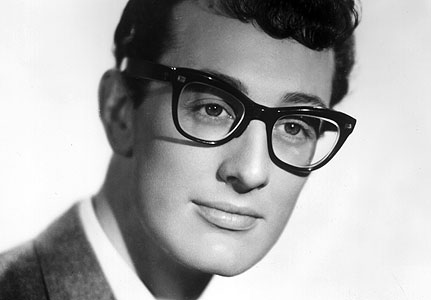
So I was optimistic, but not overhwelmed with excitement, when I put on my 3-D glasses (yes, it was in mind-blowing three-dee!) that made me look somewhat like this guy (though my companions said I looked more like this guy), and took my seat. My memories of what came next contain a nearly formless succession of images popping off the screen and tormenting me, and I am at a loss to better describe what occured. Later, my wife informed me that what I had seen was this trailer (if you click that link, you do so at your peril), evidence that the Dark Forces that brought down Beverly Hills Chihuahua upon the earth are at it again. I recall remarking to myself that for someone who was intentionally going to see a childrens' movie, I sure tend to hate childrens' movies. I heaved an audible sigh of relief when the requisite animated short signalled the beginning of the film. The short was a delightful, whimsical affair, a story of a long-suffering stork and the living cloud that loved him (seriously). Lindsey said "Aaaawwwww" roughly every ten seconds of the five-minute short, which I suppose means that she considered it to be cute. Then the movie started.
On hour and thirty-six minutes later, as the credits rolled up the screen, I turned to my companions, bewildered, and demanded: "That was a kids' movie?" Indeed, the lone child in our group (my eight-year-old brother-in-law) said he had loved it, and probably for the reasons you'd expect: a man flies his house with baloons, and there are goofy talking animals. I also nearly cried twice. I'm only willing to admit as much because I'm fairly sure I was not alone, and indeed some of my companions actually did cry, more than twice. In short, the movie is really, really good. It was also hilarious, don't get me wrong, but it manages to tug every freaking one of your heart strings on its way to your funny bone. Yes, I just used two made-up body parts in one sentence.
Up is better than it has any business being. I hear that it's been doing fairly well at the box office, and that's great, but I'm actually surprised it was released at all. I don't know the movie business, but it looks to me like movie-making suicide. Kids' movies aren't supposed to make people cry. I'm sure that the folks at Disney have already figured it out, but I have no idea how to merchandise this movie. What, are they going to make Carl Fredirickson action figures? Probably, but all the same. I can't even conceive of making sequels out of the thing. It's impossible.
Anyways, go watch the movie! I wouldn't recommend the 3-D experience, though. It's alright, but it's just sort of a gimmick. My favorite part of it was the ridiculous glasses I got to keep. Oh, and never, ever mention that ginuea pig movie to me again.
Lindsey and I, together with a few friends and a large contingent of my in-laws, went to see Pixar's Up over the weekend, and if you don't want to sit through this post, presumably because my entire readership is contained within the group I mentioned above (no, not the 19th Century French composers), I'll cut right to the chase: If you like movies, you should watch Up. Phew! I hope you enjoyed that run-on sentence as much as I did. I knew very little about the movie when I went to see it, except that it was made by Pixar, and therefore was very likely to be enjoyable. I also noticed in the preview I'd seen that the central character of the film appeared to be a grumpy septuagenarian, and that intrigued me. You just don't see many kids' movies about old men; they're harder to merchandise. So, I was expecting the movie to, at worst, be not bad. If it turned out to be something along the lines of A Bug's Life, I would still enjoy myself, and if I won out, it could be as good as The Incredibles. Yes, I'm a grown man, and I like cartoons. Sue me.
So I was optimistic, but not overhwelmed with excitement, when I put on my 3-D glasses (yes, it was in mind-blowing three-dee!) that made me look somewhat like this guy (though my companions said I looked more like this guy), and took my seat. My memories of what came next contain a nearly formless succession of images popping off the screen and tormenting me, and I am at a loss to better describe what occured. Later, my wife informed me that what I had seen was this trailer (if you click that link, you do so at your peril), evidence that the Dark Forces that brought down Beverly Hills Chihuahua upon the earth are at it again. I recall remarking to myself that for someone who was intentionally going to see a childrens' movie, I sure tend to hate childrens' movies. I heaved an audible sigh of relief when the requisite animated short signalled the beginning of the film. The short was a delightful, whimsical affair, a story of a long-suffering stork and the living cloud that loved him (seriously). Lindsey said "Aaaawwwww" roughly every ten seconds of the five-minute short, which I suppose means that she considered it to be cute. Then the movie started.

On hour and thirty-six minutes later, as the credits rolled up the screen, I turned to my companions, bewildered, and demanded: "That was a kids' movie?" Indeed, the lone child in our group (my eight-year-old brother-in-law) said he had loved it, and probably for the reasons you'd expect: a man flies his house with baloons, and there are goofy talking animals. I also nearly cried twice. I'm only willing to admit as much because I'm fairly sure I was not alone, and indeed some of my companions actually did cry, more than twice. In short, the movie is really, really good. It was also hilarious, don't get me wrong, but it manages to tug every freaking one of your heart strings on its way to your funny bone. Yes, I just used two made-up body parts in one sentence.
Up is better than it has any business being. I hear that it's been doing fairly well at the box office, and that's great, but I'm actually surprised it was released at all. I don't know the movie business, but it looks to me like movie-making suicide. Kids' movies aren't supposed to make people cry. I'm sure that the folks at Disney have already figured it out, but I have no idea how to merchandise this movie. What, are they going to make Carl Fredirickson action figures? Probably, but all the same. I can't even conceive of making sequels out of the thing. It's impossible.
Anyways, go watch the movie! I wouldn't recommend the 3-D experience, though. It's alright, but it's just sort of a gimmick. My favorite part of it was the ridiculous glasses I got to keep. Oh, and never, ever mention that ginuea pig movie to me again.
Monday, June 01, 2009
The Impostor
It's a few moments before nine o'clock on a Saturday morning, and not only am I not in bed, I'm an hour's drive from it. And I'm stretching. It's a cloudy morning, cold for this time of year. A light drizzle is falling, and I've just pinned a number onto the front of my t-shirt. And I'm stretching. What am I doing? This is not the sort of thing I do. A few members of the crowd I've joined at the starting line are exchanging friendly taunts. Some are telling each other the time they'd like to finish in, or swapping a few workout tips. Everyone's smiling, chatty, and fidgeting a bit. A few of the guys standing near me allow me to join in their conversation. They're talking about running, which I suppose is a natural starting point for a conversation at a starting line. But they think I'm one of them. The drizzle has let up. I'm cold. I'm tired. I awoke too late to make coffee. Lindsey's still at home, in bed. Probably still asleep, even. Maybe she's sat up by now, and is reading a book, but she's almost certainly still under the covers. I yawn, and rub my eyes one last time. "ON YOUR MARKS! GET SET..." A bullhorn goes off. I'm running. In a race. This is not the sort of thing I do.
Wednesday, May 27, 2009
Update
I finished reading E.F. Schumacher's Small Is Beautiful. I'll try to put up my thoughts about the whole thing soon, but I'm having trouble putting them into any sort of order, mostly because Schumacher doesn't do as much with his thoughts, either. I shall endeavor to do the book justice, in any case.
In other news, the new Star Trek film is surprisingly good, whether or not you are, as I have claimed to be, a moderate and completely reasonable fan of Star Trek. The film was even found to be highly enjoyable by my resident less-than-moderate Trekkie (my wife), who has admitted to reading books (yes, plural) about Worf's difficult time making human friends at Starfleet Academy. I wish I could ask a truly unbiased person their opinion on the flick, but everyone I know who saw it is pretty much a geek. No offense, everyone. I saw it too.
Also, I haven't forgotten about this blog, even if you have. I just haven't posted anything on it for a rather long time. I seem to enjoy doing so when I get around to it though, so maybe I'll pick up the frequency a bit.
In other news, the new Star Trek film is surprisingly good, whether or not you are, as I have claimed to be, a moderate and completely reasonable fan of Star Trek. The film was even found to be highly enjoyable by my resident less-than-moderate Trekkie (my wife), who has admitted to reading books (yes, plural) about Worf's difficult time making human friends at Starfleet Academy. I wish I could ask a truly unbiased person their opinion on the flick, but everyone I know who saw it is pretty much a geek. No offense, everyone. I saw it too.
Also, I haven't forgotten about this blog, even if you have. I just haven't posted anything on it for a rather long time. I seem to enjoy doing so when I get around to it though, so maybe I'll pick up the frequency a bit.
Serve Me Up One Of Them Slices O' Life!
Now, according to the Font Of all Human Knowledge, "gender" is a rather complicated term, one which ought to be applied only with a great deal of caution, if at all. I understand that it's supposed to be distinguished from "sex" (even though in most cases, by almost any definition, the two aren't appreciably different), but this question on an online job application had me puzzled:
 Now, even if you regard your gender as being different from your sex, couldn't you still be expected to, y'know, know it? I'm just asking.
Maybe they ought to have included a few deep epistemological questions dealing with how hard it is to really know anything, as well as asking whether or not the applicant is currently undergoing some sort of existential crisis.
 Now, even if you regard your gender as being different from your sex, couldn't you still be expected to, y'know, know it? I'm just asking.
Maybe they ought to have included a few deep epistemological questions dealing with how hard it is to really know anything, as well as asking whether or not the applicant is currently undergoing some sort of existential crisis.
Friday, April 17, 2009
On Context
The following footnote on an excellent blog post by James Kwak struck me in a funny sort of way:
Now, his use of the words "only" and "small" is (I think) intentionally ironic. The funny part is that it's also appropriate. (Look at the scale of the vertical axes in his graphs.)
I tend to ideologically disagree with Kwak and his co-blogger Simon Johnson on a number of points, but their blog is still highly recommended. I (belatedly) thank my mother-in-law for having directed me to it.
I got my data from the financial supplements on this page. There’s a small discrepancy in the Q1 2006 numbers, depending on whether you look at the Q1 2006 release or the Q1 2007 release. But it’s only about $100 million, so I didn’t bother looking into it [emphasis mine].
Now, his use of the words "only" and "small" is (I think) intentionally ironic. The funny part is that it's also appropriate. (Look at the scale of the vertical axes in his graphs.)
I tend to ideologically disagree with Kwak and his co-blogger Simon Johnson on a number of points, but their blog is still highly recommended. I (belatedly) thank my mother-in-law for having directed me to it.
Thursday, April 02, 2009
Sound Off!
The New York Times has a little piece about the impending demise of voice mail, which if it's true could be the greatest thing that has ever happened to me. I have no idea if it is true, mind you. The closest I've ever come to reading the tea leaves of technological advance came early in my adolescence, when I ingeniously came up with the idea of a coffee maker that had a timer built into it (so that your coffee is already brewed when you wake up), only to discover that such a wonderment actually already existed. To be honest, before reading the article, I had no idea that I was not alone in hating voice mail. The knowledge that there are other people out there like me, that I may in fact be part of some kind of movement, is strangely empowering.
The funny thing is that my current phone service doesn't even include text messages - I pay separately for each text I send or receive - and for that matter, I really dislike writing text messages on my phone. I even tell my friends not to send me texts, but when they ignore this request, and I actually receive a text message, it's an invigorating experience: all that they had to say to me is right there, on my phone's display screen. Whoa. It's like my first train ride. I don't have to dial anything, or hear a Majel Barrett sound-alike tell me that I have "TWO UNheard MESsages... FIRst MESsage, SENT TOday, at SEVen SIxtEEn P.M." I don't have to sit through several stammering sentences of my friend or loved one trying to find the right words to tell me one sentence's worth of information. I should say that I don't mean any of the above as an indictment of anyone who has ever contacted me via voicemail. I am very bad at leaving succinct voice messages myself. Voice mails have their place, for now. I just hope that they don't keep it for very much longer.
"But Cous," you're thinking, "What about the human element? You don't get to hear the inflection in someone's human voice by reading a text message from them!" To that, I have two responses: first, I don't think voice mail is going away completely. I think you'll still be able to leave your mom a touching voice message on Mother's Day when she misses your call because she's on the phone with your older brother who she loves more than you, and you can still call your friend from outside the pub on St. Patrick's day to sing them the first few bars of "Danny Boy," before you get to the part where you don't know the lyrics. It's just that most of what we use voicemail for is better suited for other modes of communication, or soon will be. Second, unless it's that touching voicemail from your not-quite-favorite child on Mother's Day, there's nothing all that human about voicemail as it is. You can't converse with your voice mail messages, after all; you can only play them back. Ever miss a phone number in someone's message and ask them politely to just repeat that part? Try it sometime. You'll realise that, however familiar the voice you're hearing may be, you're not interacting with a human being, but merely a lifeless facsimile of that human being. That's right: for all that they can do, voice messages are incapable of love.
The funny thing is that my current phone service doesn't even include text messages - I pay separately for each text I send or receive - and for that matter, I really dislike writing text messages on my phone. I even tell my friends not to send me texts, but when they ignore this request, and I actually receive a text message, it's an invigorating experience: all that they had to say to me is right there, on my phone's display screen. Whoa. It's like my first train ride. I don't have to dial anything, or hear a Majel Barrett sound-alike tell me that I have "TWO UNheard MESsages... FIRst MESsage, SENT TOday, at SEVen SIxtEEn P.M." I don't have to sit through several stammering sentences of my friend or loved one trying to find the right words to tell me one sentence's worth of information. I should say that I don't mean any of the above as an indictment of anyone who has ever contacted me via voicemail. I am very bad at leaving succinct voice messages myself. Voice mails have their place, for now. I just hope that they don't keep it for very much longer.
"But Cous," you're thinking, "What about the human element? You don't get to hear the inflection in someone's human voice by reading a text message from them!" To that, I have two responses: first, I don't think voice mail is going away completely. I think you'll still be able to leave your mom a touching voice message on Mother's Day when she misses your call because she's on the phone with your older brother who she loves more than you, and you can still call your friend from outside the pub on St. Patrick's day to sing them the first few bars of "Danny Boy," before you get to the part where you don't know the lyrics. It's just that most of what we use voicemail for is better suited for other modes of communication, or soon will be. Second, unless it's that touching voicemail from your not-quite-favorite child on Mother's Day, there's nothing all that human about voicemail as it is. You can't converse with your voice mail messages, after all; you can only play them back. Ever miss a phone number in someone's message and ask them politely to just repeat that part? Try it sometime. You'll realise that, however familiar the voice you're hearing may be, you're not interacting with a human being, but merely a lifeless facsimile of that human being. That's right: for all that they can do, voice messages are incapable of love.
Thursday, March 26, 2009
"It's Mighty Funny, The End Of Time Has Just Begun"
I was thinking the other day about the End Of The World. You might suggest to me that it's a healthy thing to think about, either because human advancement is speeding the planet's demise, or perhaps because it's helpful to meditate from time to time on one's own mortality, but I have to admit that my particular line of thinking was more whimsical than all that. Assuming that the world will end at all (and I think it will), how it happens will probably be pretty interesting to whoever happens to be around at the time that time ceases to be. Sure, perhaps the Universe will continue on its merry way without us being there to watch it, but what's the point in thinking about time when there are no more people to watch the clocks? People theorize a great deal about what happened before humanity existed, and how long it may have taken, and that's an interesting and hopefully humbling thing to study. But what about time, and the Universe, after humanity's cosmically (comically?) brief existence? It's somewhat less compelling, really. I was somewhat surprised at myself to reflect that whenever the subject came up, either when I'm thinking about it alone or discussing it with others, there are certain doomsday scenarios which are infinitely more desirable than others. After further reflection, I determined that there is what appears to be an inverse relationship between the probability of a given cause of The End and its desirability. Perhaps you've observed the same thing yourself, but I suspect that instead you've spent your time thinking about things that actually matter, and have given it very little thought. How fortunate for both of us then, that you should stumble upon this inter-net web-log, dedicated almost entirely to the study of things that (probably) don't matter.
Now then, for my money, the best possible ways for the world to end are (in no particular order):
1. Interstellar war (or something). I don't think that space aliens actually exist, but if they do, I think it would be pretty awesome if they destroyed us. Something like the beginning of Douglas Adams' The Hitchhiker's Guide to the Galaxy would be pretty much ideal, though I guess it wouldn't constitute war per se.
2. Human error (of the awesome variety). If you have to go somehow, you could do a lot worse than to be done in by science. Our best hope for this right now, as far as I know, is the existence of the Large Hadron Collider. Of course, the fact that the LHC's creators have assured us that it's perfectly safe would only contribute to the awesomeness here, in the event that they're horribly, horribly wrong. Hopefully they would get to say something like "Ye gods, what have we done?" right before the earth is engulfed in a black hole. Freakin' sweet.
3. Asteroids (on the rocks, but hold the Bruce Willis). This is (I think) more likely than #1 or #2, and as such is somewhat less desireable. It's also been the subject of a couple of really bad movies, which doesn't help its case. Still, as far as doomsday scenarios go, it's pretty cool.
Now then, on the completely pedestrian, undesreable side of things, we have:
1. Global pandemic. Unless it comes from outer space and turns us into flesh-eating zombies first, there's pretty much nothing cool about everyone on earth dying of some mutated form of Smallpox. It's also on the "relatively likely" side of thigns. It's too normal. Too square.
2. War that has nothing at all to do with space aliens. Let's face it, people are pretty good at destroying one another in ridiculously uncool ways. It's pretty believable that Armageddon could happen this way, and I have no reason to believe that the end of the Cold War has made it significantly less likely.
3. Global Warming. Apparently this is now called "Climate Change," probably because too many Midwesterners have taken to facetiously welcoming the idea of "warming" every single time it snows, and I mention it often enough on this blog that I'm going to start calling it simply ΔC. Now, ΔC finally killing us off is a lot less likely than it used to be, but there are rumors that it wasn't completely defeated in the summer of 2007, and is rearing for a comeback. If this happens, I predict that it will be pretty lame.
4. Human error (of the not-awesome variety). This could manifest in any number of ways, but would probably resemble either global pandemic (1), accidental use of WMDs (2), or boring old ΔC (3), all of which, as discussed above, would be lame.
Anyways, those are my two lists. What are yours? The Font of All Human Knowledge has a pretty good list to pick from here, if you're stumped.
Now then, for my money, the best possible ways for the world to end are (in no particular order):
1. Interstellar war (or something). I don't think that space aliens actually exist, but if they do, I think it would be pretty awesome if they destroyed us. Something like the beginning of Douglas Adams' The Hitchhiker's Guide to the Galaxy would be pretty much ideal, though I guess it wouldn't constitute war per se.
2. Human error (of the awesome variety). If you have to go somehow, you could do a lot worse than to be done in by science. Our best hope for this right now, as far as I know, is the existence of the Large Hadron Collider. Of course, the fact that the LHC's creators have assured us that it's perfectly safe would only contribute to the awesomeness here, in the event that they're horribly, horribly wrong. Hopefully they would get to say something like "Ye gods, what have we done?" right before the earth is engulfed in a black hole. Freakin' sweet.
3. Asteroids (on the rocks, but hold the Bruce Willis). This is (I think) more likely than #1 or #2, and as such is somewhat less desireable. It's also been the subject of a couple of really bad movies, which doesn't help its case. Still, as far as doomsday scenarios go, it's pretty cool.
Now then, on the completely pedestrian, undesreable side of things, we have:
1. Global pandemic. Unless it comes from outer space and turns us into flesh-eating zombies first, there's pretty much nothing cool about everyone on earth dying of some mutated form of Smallpox. It's also on the "relatively likely" side of thigns. It's too normal. Too square.
2. War that has nothing at all to do with space aliens. Let's face it, people are pretty good at destroying one another in ridiculously uncool ways. It's pretty believable that Armageddon could happen this way, and I have no reason to believe that the end of the Cold War has made it significantly less likely.
3. Global Warming. Apparently this is now called "Climate Change," probably because too many Midwesterners have taken to facetiously welcoming the idea of "warming" every single time it snows, and I mention it often enough on this blog that I'm going to start calling it simply ΔC. Now, ΔC finally killing us off is a lot less likely than it used to be, but there are rumors that it wasn't completely defeated in the summer of 2007, and is rearing for a comeback. If this happens, I predict that it will be pretty lame.
4. Human error (of the not-awesome variety). This could manifest in any number of ways, but would probably resemble either global pandemic (1), accidental use of WMDs (2), or boring old ΔC (3), all of which, as discussed above, would be lame.
Anyways, those are my two lists. What are yours? The Font of All Human Knowledge has a pretty good list to pick from here, if you're stumped.
Friday, March 06, 2009
Book Titles Redux
I mentioned a few days ago that I advocate judging a book by its cover, particularly if you've got little or nothing else to go on. I also mentioned (and have been verbally and electronically pilloried for doing so ever since) that I found every woman on earth's favorite book rather boring.
With all that in mind, something about this little work of literature caught my attention. Now that's a good title: it's simple, to the point, grabs your attention, and tells you roughly what to expect from the book.
I thank Kathleen K. and Eric (separately) for the pointer.
By the by, Tyler Cowen, who reads an obscene amount, has some very interesting things to say about judging a book by its cover.
With all that in mind, something about this little work of literature caught my attention. Now that's a good title: it's simple, to the point, grabs your attention, and tells you roughly what to expect from the book.
I thank Kathleen K. and Eric (separately) for the pointer.
By the by, Tyler Cowen, who reads an obscene amount, has some very interesting things to say about judging a book by its cover.
Thursday, March 05, 2009
Stuff I've Been Digging
1. U2's new record, No Line On The Horizon. Surprisingly, the most popular rock band in the world continues to make really good music. Longtime U2 producers Eno and Lanois share writing credits on the album, and their presence can certainly be felt over the whole thing, which overall feels much more cohesive than their last few efforts. Their signature heart-on-sleeve bombast survives, the band continuing to be self-aware enough to avoid pretension despite high ambition. One of my favorite things about U2 is the fact that they continually push themselves artistically, and this record has a great, adventurous feel to it. It's honest, intimate, and (best of all) fun to listen to.
2. Steven Hawking's A Brief History of Time. I found a used hardcover copy in excellent condition for a dollar at the library, and I couldn't refuse it. I'm in no position to comment on the science, but the entertainment value of the work is very high. Hawking's claim early in the book that it contains only one equation (E = MC^2) isn't exactly true--there are several equations which are merely expressed in english, rather than mathematical notation--but it's no matter, the book is great for a non-scientist such as I, and I think he makes the subject matter as easy to comprehend as any discussion of infinity can be. My only quam so far (I've not finished it yet) is that he insists on saying "million million" instead of "trillion." Was the word just less commonly used when the book was written? I don't know.
3. Star Trek: The Next Generation. I'm kind of a closet Trekkie, which I guess means that I enjoy Star Trek in what I would define as some form of moderation. I certainly don't indulge in the excesses of Trek geekness, such as reading fan fiction, contributing to the expansive Star Trek wiki, or pretending that Star Trek IV was anything other than a festering turd of a film. In any case, I really liked this show growing up (it was one of the few TV shows my family watched). Recently, the wife (who is less ashamed of her affection for Star Trek than I am, claims to like Star Trek IV, and has even read some fan fiction) and I borrowed the first season of TNG from my parents, and have been enjoying it's hilarious late '80s campiness, generally with the exception of the much-hated Wesley Crusher. It's also surprising how little the production value of network television increased between the medium's inception and the advent of DVD. Particularly in the first season, TNG doesn't really look any better (for that matter, it isn't any better written) than its late '60s predecessor. My favorite running joke of the whole thing is that in the world of the show, human society has advanced beyond material want, and yet they haven't figured out that seat belts might be a really good idea.
That's all I've got for now. I would write about something more interesting, if only I could think of it. TTFN! Ta Ta For Now!
2. Steven Hawking's A Brief History of Time. I found a used hardcover copy in excellent condition for a dollar at the library, and I couldn't refuse it. I'm in no position to comment on the science, but the entertainment value of the work is very high. Hawking's claim early in the book that it contains only one equation (E = MC^2) isn't exactly true--there are several equations which are merely expressed in english, rather than mathematical notation--but it's no matter, the book is great for a non-scientist such as I, and I think he makes the subject matter as easy to comprehend as any discussion of infinity can be. My only quam so far (I've not finished it yet) is that he insists on saying "million million" instead of "trillion." Was the word just less commonly used when the book was written? I don't know.
3. Star Trek: The Next Generation. I'm kind of a closet Trekkie, which I guess means that I enjoy Star Trek in what I would define as some form of moderation. I certainly don't indulge in the excesses of Trek geekness, such as reading fan fiction, contributing to the expansive Star Trek wiki, or pretending that Star Trek IV was anything other than a festering turd of a film. In any case, I really liked this show growing up (it was one of the few TV shows my family watched). Recently, the wife (who is less ashamed of her affection for Star Trek than I am, claims to like Star Trek IV, and has even read some fan fiction) and I borrowed the first season of TNG from my parents, and have been enjoying it's hilarious late '80s campiness, generally with the exception of the much-hated Wesley Crusher. It's also surprising how little the production value of network television increased between the medium's inception and the advent of DVD. Particularly in the first season, TNG doesn't really look any better (for that matter, it isn't any better written) than its late '60s predecessor. My favorite running joke of the whole thing is that in the world of the show, human society has advanced beyond material want, and yet they haven't figured out that seat belts might be a really good idea.
That's all I've got for now. I would write about something more interesting, if only I could think of it. TTFN! Ta Ta For Now!
Monday, March 02, 2009
In Which We Provide A Brief Discussion of Book Titles
A friend and I have both decided (at his suggestion) to tackle and discuss E.F. Schumacher's Small is Beautiful: Economics as if People Mattered. Conveniently, I already had two copies on my shelf, gifts from two different family members, who apparently upon learning that I'd decided to study economics began to fear for the state of my soul. Both copies of the book have since then sat on my shelf these past few years, with nothing but their somewhat garish cover art with which to occupy themselves, and my occasional changes in domicile to alter their location. It isn't as though I never meant to read them, mind you (though I always thought I'd read just one of them; there's no sense in going overboard), but there has always been a seemingly endless supply of books that I would rather read first. Whenever it caught my eye (as two identical books next to each other on a shelf can do) I would always say to myself, as my Grandmother is fond of saying, I wish I wanted to do that. I should mention that I don't really know what the book is about, and that I generally like reading about economics (after all, I have a degree in it). I'm not even remotely familiar with its author. No, the book's only sin, aside from the aforementioned artwork on its jacket, for which it had been relegated to its current perdition, was its title. It's subtitle, to be exact (that's the part the comes after the colon).
You see, from where I sit, economics is about people. It's a social science, after all: a study of people. The book doesn't do itself any favors in my estimation by starting with what appears to be a false premise, namely that people don't matter to economics in general. You may as well put a book on my shelf entitled If Only All Irish-Americans Weren't Sociopaths. Sure, it has a certain ring to it, but it doesn't pose itself to be taken seriously, at least as a work of nonfiction.
In any case, after a week of prodding from my friend, I've decided to read it. It's only about three hundred pages; it shouldn't take all that long, anyways. It may end up being good, I don't know. They say that you can't judge a book by it's cover, but I generally think that to be false. In a given lifetime, you just haven't got time to read everything. I read pretty slowly, so for me this is even more true than for many people. Assuming that you value reading at all (not everyone does), you have to choose what to read somehow, and a cover (ideally, at least) tells you something about the book. In this case, if Small Is Beautiful ends up being good, then its cover is guilty of spreading misinformation about it.
By the way, the friend I mentioned is John, the author of Basebology, and one of this blog's only regular commentors. For all I know, he's the only person who'll ever read this post, for that matter. When we've finished the book (assuming that the world doesn't end first, of course), I may try to get a few money quotes from him to put up on this space, which will probably be easier than formulating my own thoughts about it. Who knows? He may even be able to relate the book's contents to our national pastime.

You see, from where I sit, economics is about people. It's a social science, after all: a study of people. The book doesn't do itself any favors in my estimation by starting with what appears to be a false premise, namely that people don't matter to economics in general. You may as well put a book on my shelf entitled If Only All Irish-Americans Weren't Sociopaths. Sure, it has a certain ring to it, but it doesn't pose itself to be taken seriously, at least as a work of nonfiction.
In any case, after a week of prodding from my friend, I've decided to read it. It's only about three hundred pages; it shouldn't take all that long, anyways. It may end up being good, I don't know. They say that you can't judge a book by it's cover, but I generally think that to be false. In a given lifetime, you just haven't got time to read everything. I read pretty slowly, so for me this is even more true than for many people. Assuming that you value reading at all (not everyone does), you have to choose what to read somehow, and a cover (ideally, at least) tells you something about the book. In this case, if Small Is Beautiful ends up being good, then its cover is guilty of spreading misinformation about it.
By the way, the friend I mentioned is John, the author of Basebology, and one of this blog's only regular commentors. For all I know, he's the only person who'll ever read this post, for that matter. When we've finished the book (assuming that the world doesn't end first, of course), I may try to get a few money quotes from him to put up on this space, which will probably be easier than formulating my own thoughts about it. Who knows? He may even be able to relate the book's contents to our national pastime.
Monday, February 09, 2009
Ah, The Proverbial Low-Hanging Fruit!
For some reason, I can't let this one go. David Zax has a little column out there on the inter-nets which asks:
"What if [the Kevin Costner movie Waterworld] were an eco-parable whose message was ahead of its time?"
With all due respect to Mr. Zax and his correct use of the subjunctive, that's a pretty big "what if." He goes on:
I'm pretty sure that will reach him. Now, where was I? Oh, right. Zax. Waterworld. Those of you who have been fortunate enough never to have seen this film only need to know that it's set in a future in which the earth (yes, our earth) has been covered by several thousand feet of water, presumably due to Global Warming. It's really unclear where Global Warming came up with all the water necessary to do this, but it's a wily foe. The film stars Kevin Costner, who in the film has evolved gills and (more remarkably) the ability to keep a straight face while portraying a man who has evolved gills. What have you got to say about it, Zax?
Mr. Zax appears to be claiming that this is a good film because the above-described villains are a pretty clever characterization of Republicans. Don't you get it? They worship a dead guy, love chain-smoking, violence, and (most of all) pollution, and they don't believe in evolution! Ho ho ho! Zing. Nail, head, etc.
His central thesis here is that this was all somehow missed when the movie came out, since it was back in the hedonistic nineties, before everyone got hip to what was goin' down on Environment Street. I'm forced to conclude that David Zax is younger than I am.
You see, back in the 'nineties we had Republicans just like the ones we have today, and we also had environmentalists (though at the time all they would talk about was a supposed hole in the Ozone Layer), and we also had preachy science fiction films, most of which were better than Waterworld. The film wasn't ahead of its time, Dave. If anything, it missed the 'Mad Max' bus by a good decade.
 Yes, if you are wondering, it is an awesome film (by the way, I stole that picture from here). Like Waterworld, it was preachy science fiction, but it was anti-war, which is actually, like, a real problem, man.
Sigh. Where am I going with this? I don't even know. If you've stuck with me through this whole thing, waiting for some kind of punchline, I haven't got one. Let me try to sum all this up, just to have it make some kind of sense:
-Don't watch Waterworld. No, not even ironically.
-Don't watch the remake of The Day The Earth Stood Still.
-Watch the original The Day The Earth Stood Still. It's awesome. Also, I'm pretty sure that Gort, the nine-foot, faceless robot could act the pants off of Keanu Reaves.
-On a related note, I would totally watch Bill & Gort's Excellent Adventure.
-David Zax has a funny last name, and I've been writing this whole time picturing someone who looks like this dude.
That is all. I'm sorry. I promise that my next post will be shorter.
"What if [the Kevin Costner movie Waterworld] were an eco-parable whose message was ahead of its time?"
With all due respect to Mr. Zax and his correct use of the subjunctive, that's a pretty big "what if." He goes on:
[H]as Waterworld's moment finally arrived? The movie opens with an image of the globe as we know it slowly being swallowed by blue while a narrator explains that in the future, "the polar ice caps have melted, covering the world with water." Something similar, if less dramatic, is happening right now on Earth. Global warming is causing seas to rise (though the polar ice caps have little to do with it). In its 2007 report, the Intergovernmental Panel on Climate Change projected a sea-level rise of between seven and 23 inches by 2100. While that might not seem like much, it could be enough to make a low-lying island untenable: Recently, the Maldives' new president announced his intention to buy land to relocate his entire nation if necessary.Ok, for starters: the president of the Maldives can rest easy; Sting took care of that one. If you'd like to send him a "thank you" card, he can be reached at the following address:
Sting
England (probably)
Earth, Solar System (again, probably)
The first thing we see our hero do in the film is recycle: The Mariner (as Costner's character is known) has a device that transforms his urine into potable water, which he shares with a small potted lime tree. Even when in a bind, the Mariner insists on piloting his three-hulled catamaran solely with a renewable resource, wind.
The Mariner's enemies are the aptly named Smokers, pirates who chain-smoke ancient cigarettes and favor gas-guzzling biplanes and jet skis. Their leader, the militaristic Deacon (a manic Dennis Hopper), is staunchly anti-science, declaring that God made "both man and fish, and no combination thereof. He does not abide the notion of evolution!" The car that he wheels around his supertanker sports a "NUKE THE WHALES" bumper sticker, and he worships "Saint Joe" Hazelwood, pilot of the Exxon Valdez. An enemy of sustainable living—he heads something called the Church of Eternal Growth—he is obsessed with finding the mythical Dryland, which he plans to rape as soon as he gets his hands on it: "If there's a river we'll dam it, and if there's a tree we'll ram it," he sermonizes to his flock.This is a pretty apt description of what's going on, so I have to conclude that Zax and I are talking about the same movie. The funny part is that he's using the above paragraph to make his case that it is a good movie, while I'm making the exact opposite contention. It's an awful movie. If you could go to prison for making a bad movie, Kostner never would have been free to make Swing Vote, unless it were filmed in the cell in which he'd be serving 136 consecutive life sentences, one for each minute of Waterworld. It is that bad.
Mr. Zax appears to be claiming that this is a good film because the above-described villains are a pretty clever characterization of Republicans. Don't you get it? They worship a dead guy, love chain-smoking, violence, and (most of all) pollution, and they don't believe in evolution! Ho ho ho! Zing. Nail, head, etc.
His central thesis here is that this was all somehow missed when the movie came out, since it was back in the hedonistic nineties, before everyone got hip to what was goin' down on Environment Street. I'm forced to conclude that David Zax is younger than I am.
You see, back in the 'nineties we had Republicans just like the ones we have today, and we also had environmentalists (though at the time all they would talk about was a supposed hole in the Ozone Layer), and we also had preachy science fiction films, most of which were better than Waterworld. The film wasn't ahead of its time, Dave. If anything, it missed the 'Mad Max' bus by a good decade.
Attempts have been made to give global warming a face—the polar bear, New Orleans—and eco-thrillers like The Day After Tomorrow have imagined what sudden climate change might look like. But the task of making people care about the future is tougher. And few things can make the future more vivid than a good science fiction movie. Is Waterworld such a film?No. It is not.
[D]espite being a better movie than most people remember, Waterworld has its limitations as an eco-parable. It doesn't begin, as does The Day After Tomorrow, with a standoff between a climate scientist and a Cheney-esque symbol of corporate greed, nor does it issue an implicit ultimatum, as did last year's remake of The Day the Earth Stood Still (in which Keanu Reeves played an alien sent to Earth to assess whether humans could change their planet-abusing ways or whether they should simply be exterminated).Wow. I'd like to take this opportunity to thank Zax for doing his part to keep the "Dick Cheney as a buzzword for anything evil" meme going. Thanks, Zax. Thax. Also, is that really what the remake of The Day The Earth Stood Still was about? Because in the original film, the aliens showed up to warn humans not to bring our waring ways into space with us, because if we did, we'd have this guy to contend with:
 Yes, if you are wondering, it is an awesome film (by the way, I stole that picture from here). Like Waterworld, it was preachy science fiction, but it was anti-war, which is actually, like, a real problem, man.
In the end, what stymies the environmentalist who would tease a message out of Waterworld is this: It isn't grim enough. When the protagonists aren't in the middle of a swashbuckling set piece, they're patiently coping and demonstrating hope. "We'll just start over again," says that old inventor good-naturedly after his city is sacked. The film ends happily with the discovery of Dryland (Mount Everest, it turns out), an abundant paradise with cascading fresh water and galloping wild horses.Dude, I'm trying to tell you: the message is there. On the surface. You don't have to tease the message out of the film, because anyone who is foolish enough to watch the movie will get it's corny message right in the first few corny seconds of the awful thing.
Sigh. Where am I going with this? I don't even know. If you've stuck with me through this whole thing, waiting for some kind of punchline, I haven't got one. Let me try to sum all this up, just to have it make some kind of sense:
-Don't watch Waterworld. No, not even ironically.
-Don't watch the remake of The Day The Earth Stood Still.
-Watch the original The Day The Earth Stood Still. It's awesome. Also, I'm pretty sure that Gort, the nine-foot, faceless robot could act the pants off of Keanu Reaves.


-On a related note, I would totally watch Bill & Gort's Excellent Adventure.
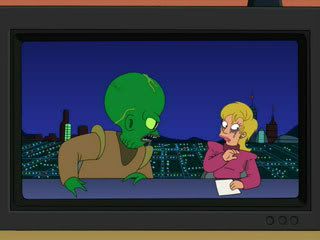
-David Zax has a funny last name, and I've been writing this whole time picturing someone who looks like this dude.
That is all. I'm sorry. I promise that my next post will be shorter.
Thursday, January 15, 2009
It Seems That There Are Times When It Is Disadvantageous To Have The Name Of Your Airline Written On The Side Of Your Plane
 Who knew?
I should mention that I did not take this picture, but that someone named Janis Krums did, and that I found it here. I will take it down as soon as Mr. Krums, or someone representing him, asks me to do so, at dcous at hotmail dot com.
Monday, January 05, 2009
It's A New Year, They Tell Me (I'll Believe It When I see It)
Christmas is over, at least to the extent that it ever is. I mean, it isn't as if God's about to un-send His Only Son into (out of?) the world. Still, the Christmas tree, the glow from which only a short while ago brought so much cheer is now clutter in the living room, soon to be clutter in the back of the closet. I suppose you're now back to whatever it was you were doing before, having returned any unwanted gifts for cold, hard store credit only. Sorry. It was a wonderful Yuletide for me, though perhaps the first one for me which I found genuinely exhausting. Oh well, worse fates could befall a man, to be sure. I suppose that since this is my first post of the year, I should tell you that I've resolved to improve myself and my behavior in some significant and tangible way, and I have, but if I were to tell you how it would be written on the inter-nets forever, and I'd never be able to get away with abandoning my resolve. Perhaps by not telling you now, I've already decided to abandon it at some point in the future, which is really the same as listening to the sound of your own footsteps instead of paying attention to where they're taking you, and perhaps it's to no such place as to which one should go, if you see my meaning. Perhaps I haven't got one. Bundle up out there, it's a cold one.
Tuesday, December 09, 2008
I Know, I Promised To Stop Writing About Jane Austen
However, this is just about the funniest thing I've read all year. This beats all film adaptations of the book by a long shot. It's the definitive version of Pride and Prejudice. I daresay it would be impossible to improve upon it.
Hat Tip: Marginal Revolution.
Hat Tip: Marginal Revolution.
Monday, December 08, 2008
Christmas In America
I overheard this little cultural artifact in the grocery store's PA system over the weekend:
All of the other reindeer used to laugh and call him namesThe timing was absolutely flawless.
They wouldn't let poor Rudolph play in any reindeer games
'Till one foggy Christmas Eve, Santa came to say:
*crrt... SHAWNA, LINE TWO! SHAWNA, LINE TWO! ...crrt*
Then how the reindeer loved him as they shouted out with glee
'Rudolph, the red-nosed reindeer, you'll go down in history!'
Monday, December 01, 2008
Ok, So I Finished Reading Pride and Prejudice.
Happy December to all, and welcome to my second consecutive blog post about the magnum opus of all Chick Lit, Jane Austen's Pride and Prejudice. While the future is as unforeseen by me as by any other, I trust it shall also be the last. I got some insightful comments on my last post on the topic, and (intentionally, I might add) engaged multiple people in discussion about this book over the holiday weekend, and I shall attempt to bring all of the wisdom I've gleaned from such endeavors to bear in my final pronouncements on the novel, though I don't know why I should bother. As with most things I write, if you like you may happily discard my thoughts if they disagree with your own, secure in the knowledge that I am not as smart as you are. Now then, on with it!
My first conclusion upon the completion of the book, and I have yet to controvert it, was that it's not a very "serious" book, nor is it trying to be one. This counteracted, for the most part, my disappointment. You may disagree with me here, but at least some of the persons with whom I discussed the book generally agreed with me on this point: it's just a fun yarn. It's just a love story. If that's all you're looking for (and there's nothing wrong with reading just a love story), you're in for a good read. The prose style is very enjoyable, and you may experience that warm internal glow at the conclusion of the novel that comes with knowing that the good characters all received their just rewards (in this case, marriage to one another), and that the bad characters were likewise paid their due (also marriage to one another). That's it. The book sets out to introduce to you its setting, endear you to one group of characters and acquaint you with less fondness with another group of characters, tell you the reason they all can't be blissfully happy together, and then have their innate goodness (and money) overcome whatever that reason may be. Fin. It's a warm, fuzzy kind of a book. It doesn't challenge anything, or make you think too hard, even for a moment, about anything.
It has been suggested to me that the story depicts some form of feminine liberation, though perhaps diluted to be more acceptable to the general public at the time it was written. If what I've already said above has not convinced you of my own beliefs in the matter, let me say explicitly that I do not believe this to be the case. Elizabeth Bennet is not a standard bearer. She does not change, nor does she attempt to change the male-centered dynamic which dominates the social structures present in the book. She just learns to play ball, and wins. The novel ends when she realizes how stupid she was to refuse the advances of the incredibly rich guy, because at first he wasn't especially charming. The point at which she begins to see him in a different light is when she takes a tour of his gigantic mansion. After that, she wants nothing more than to be the instrument of the issuance of his progeny. If you're looking for symbols of liberated femininity in Pride and Prejudice, you'll have to content yourself with the contrasting figures of Charlotte Lucas and Lady Catherine de Bourgh (really), and they don't get much dialog. Overall, as I said before, I don't believe Austen to think very highly of her sex. The whole of the novel contains only two likable females, the two eldest Bennet sisters. They are exceptions to an otherwise steadfast rule.
In the end, while I suppose that I'm glad that I tried, I didn't really like the book. In my first post I suggested that nothing happens in the book, a comment for which I was rebuked most heartily by my wife, among others. Allow me now the luxury of editing my own words, by affixing them with qualifiers: Nothing happens in this book that I find particularly interesting. It is an adventure story, where the sorts of exciting events that take place are new neighbors coming to town (and leaving it again), dinner parties, dances, and the occasional, can't-put-the-book-down moment where the protagonist's best friend marries an absolute fool. If this is the sort of excitement you're looking for, then dive in. You'll like it, and why shouldn't you? It's The Three Musketeers for women. For myself, I couldn't stand it. I began to enjoy the book when Lydia unexpectedly elopes with the villainous Wickham (though he barely deserves the term), and then felt cheated (and really quite bitter) when everything ends up so neatly sewn up in the end. All of the main characters were a fool about something in their turn, and in the end, with no harm caused by any of their follies, they go on their merry ways. Wealth and goodwill easily surmount all obstacles to happiness. I suppose there's nothing wrong with that, it's just not the sort of thing I enjoy. I also, in a rare instance of sticking up for myself, assert that there's nothing wrong with me for not liking it.
I've tried not to let my own biases cloud my judgment too much in my reading of the book, though I'm afraid that their continued influence is considerable. Given what I've said about what I suppose the novel's aim to be, I can't gripe too much about it, save to say that I still think Austen spends far too much type on her more obnoxious characters. While the book would suffer from the absence of such characters, the amount of attention they're given by the author hurts it almost as much, if not more. If you're the last human being who has not read this book (I was among the last), go watch one of the shorter film versions (trust me), and if you think you could stand a few hundred pages of that, this might be the book for you. If you're stuck with the six-hour version, well, then you don't need to bother with the book at all. Ciao!
My first conclusion upon the completion of the book, and I have yet to controvert it, was that it's not a very "serious" book, nor is it trying to be one. This counteracted, for the most part, my disappointment. You may disagree with me here, but at least some of the persons with whom I discussed the book generally agreed with me on this point: it's just a fun yarn. It's just a love story. If that's all you're looking for (and there's nothing wrong with reading just a love story), you're in for a good read. The prose style is very enjoyable, and you may experience that warm internal glow at the conclusion of the novel that comes with knowing that the good characters all received their just rewards (in this case, marriage to one another), and that the bad characters were likewise paid their due (also marriage to one another). That's it. The book sets out to introduce to you its setting, endear you to one group of characters and acquaint you with less fondness with another group of characters, tell you the reason they all can't be blissfully happy together, and then have their innate goodness (and money) overcome whatever that reason may be. Fin. It's a warm, fuzzy kind of a book. It doesn't challenge anything, or make you think too hard, even for a moment, about anything.
It has been suggested to me that the story depicts some form of feminine liberation, though perhaps diluted to be more acceptable to the general public at the time it was written. If what I've already said above has not convinced you of my own beliefs in the matter, let me say explicitly that I do not believe this to be the case. Elizabeth Bennet is not a standard bearer. She does not change, nor does she attempt to change the male-centered dynamic which dominates the social structures present in the book. She just learns to play ball, and wins. The novel ends when she realizes how stupid she was to refuse the advances of the incredibly rich guy, because at first he wasn't especially charming. The point at which she begins to see him in a different light is when she takes a tour of his gigantic mansion. After that, she wants nothing more than to be the instrument of the issuance of his progeny. If you're looking for symbols of liberated femininity in Pride and Prejudice, you'll have to content yourself with the contrasting figures of Charlotte Lucas and Lady Catherine de Bourgh (really), and they don't get much dialog. Overall, as I said before, I don't believe Austen to think very highly of her sex. The whole of the novel contains only two likable females, the two eldest Bennet sisters. They are exceptions to an otherwise steadfast rule.
In the end, while I suppose that I'm glad that I tried, I didn't really like the book. In my first post I suggested that nothing happens in the book, a comment for which I was rebuked most heartily by my wife, among others. Allow me now the luxury of editing my own words, by affixing them with qualifiers: Nothing happens in this book that I find particularly interesting. It is an adventure story, where the sorts of exciting events that take place are new neighbors coming to town (and leaving it again), dinner parties, dances, and the occasional, can't-put-the-book-down moment where the protagonist's best friend marries an absolute fool. If this is the sort of excitement you're looking for, then dive in. You'll like it, and why shouldn't you? It's The Three Musketeers for women. For myself, I couldn't stand it. I began to enjoy the book when Lydia unexpectedly elopes with the villainous Wickham (though he barely deserves the term), and then felt cheated (and really quite bitter) when everything ends up so neatly sewn up in the end. All of the main characters were a fool about something in their turn, and in the end, with no harm caused by any of their follies, they go on their merry ways. Wealth and goodwill easily surmount all obstacles to happiness. I suppose there's nothing wrong with that, it's just not the sort of thing I enjoy. I also, in a rare instance of sticking up for myself, assert that there's nothing wrong with me for not liking it.
I've tried not to let my own biases cloud my judgment too much in my reading of the book, though I'm afraid that their continued influence is considerable. Given what I've said about what I suppose the novel's aim to be, I can't gripe too much about it, save to say that I still think Austen spends far too much type on her more obnoxious characters. While the book would suffer from the absence of such characters, the amount of attention they're given by the author hurts it almost as much, if not more. If you're the last human being who has not read this book (I was among the last), go watch one of the shorter film versions (trust me), and if you think you could stand a few hundred pages of that, this might be the book for you. If you're stuck with the six-hour version, well, then you don't need to bother with the book at all. Ciao!
Tuesday, November 25, 2008
When Do I Get To The Good Part?
Unemployment has re-introduced to my daily routine, for the first time since early adolescence, the ritual of breakfast. Lindsey still has no time for it, and I hope that I can soon discard my discovery in favor of gainful employment, but for the past several mornings I've enjoyed having a short time set aside to drink coffee, eat toast, and collect my thoughts over a work of fiction. That said, for the life of me I've been unable to ascertain the cause of the enduring popularity of Jane Austen's Pride and Prejudice. I've been subjected to various films of the thing over the years, and been bored out of my mind. I've been derided even by male friends for not wanting anything to do with what, supposedly, is one of the greatest works of fiction in the English language. And so I pose the question to you, my (possibly only) reader: what is supposed to be so good about this book? I'm about halfway through this thing, and am determined to finish it, but it's really hard, because nothing happens. It's always been sold to me (or so I thought) as this terrific love story, but the characters are (forgive me) really pretty shallowly drawn, and the thing seems to have been constructed originally as some sort of social commentary with a love story as the main plot vehicle. I'm probably reading this thing totally wrong, but what I'm getting out of it primarily is that Jane Austen hated a) the rigid middle-to-upper-class social structure of her time, and b) women. The book is, so far, more than a little unkind to the fairer sex. Maybe that's the point? That the social structure of the time turned women into a conniving mass of mercenary vixens, intent on getting their hooks into some unfortunate (though rich) fop of a man, so that the rest of their days can be lived out in an endless string of dinner parties, card games, and social dances. That's one of my hypotheses. There also seems to be a lot of discussion of preconceived notions ("prejudices," as one might say), and their influence on decisions. I guess that would gel more with the title. Whatever the point of the thing (I'll get back to you when I finish it), Austen spends entirely too much time on characters about whom it is absolutely painful to read. The absolute stupidity of these characters defies disbelief. My third (and favorite) hypothesis is that this is actually a work of Science Fiction, about robots that have been programed to destroy the human soul. I'm sorry about the rant, here. I know that many, many people love this book, and can name all of the characters and houses featured therein, and recite their favorite passages from memory. I'm trying to keep an open mind here, really. Otherwise, I wouldn't be reading the book in the first place. I already know the story. I'm not expecting it to suddenly be full of interesting things, like sex, violence, revenge, fear, guilt, redemption, or even passion, but wow. What am I supposed to be looking for here? Am I just supposed to like this because it's British, and I get to read about places (that aren't subdivisions in Southeast Michigan) called Derbyshire and Pemberly, and to hear London simply called "town?" I don't even know. As always I welcome any comments, as I suspect that I've offended someone's sensibilities, and must now submit to a snarky, yet nonetheless righteous defense of such a hallowed tome. I want to like this thing; I really do.
Either way, I'll try to put up some final thoughts when I finish the book, which (as I said) I'm determined to do.
Either way, I'll try to put up some final thoughts when I finish the book, which (as I said) I'm determined to do.
Subscribe to:
Posts (Atom)